Good Work Matters
Cath Richardson
Partner at Stripe Partners
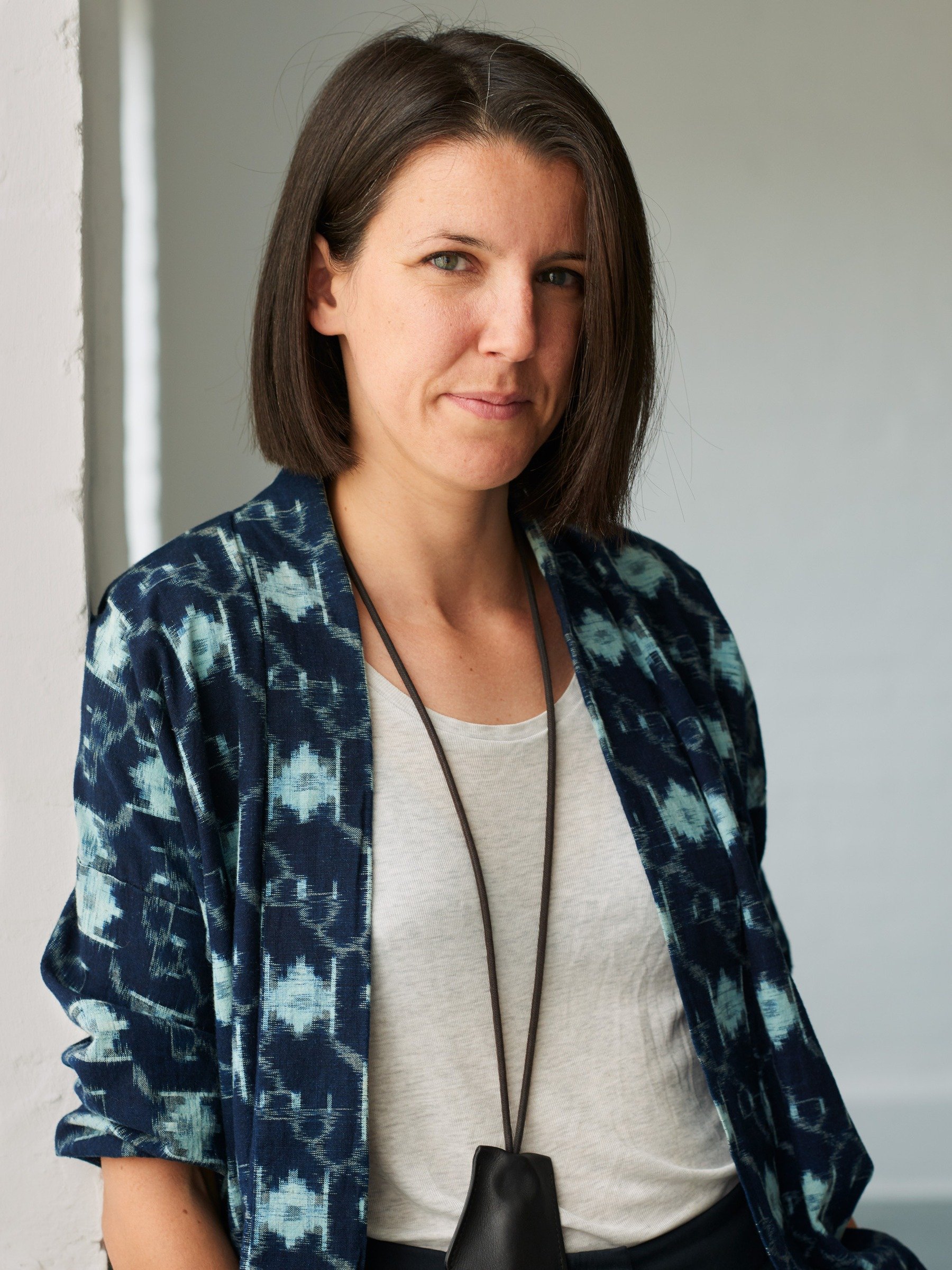
Cath Richardson is a partner at Stripe Partners – a strategic consultancy with a leaning toward innovation work for technology businesses. With roots in ethnographic research, Stripe Partners has evolved to include data science and a design practice. From a background in user research – client and agency side – Cath has been with the firm for six years. Her role combines leading client projects with shaping the business itself, from marketing to collaborating with the design team.
What does ‘good work’ look like to you – and how has that definition changed over time?
Good work is about your engagement with the topic and how deep it becomes. I think one of the hallmarks of agency life is a sense of constant change. There's always new topics, new areas, new phenomena. That's exciting but I think to do this work justice, you have to really dive deep into each opportunity. You have a responsibility to approach the work with care and focus, to really give it your attention.
So I think that good work often manifests as a kind of intense curiosity and that’s become clearer to me the more I’ve grown into the work. We recently did an assessment of skills in the business and one of the interesting things that came out of it is that everyone has the characteristic of being constantly curious.
What kind of process brings out your good work?
Obviously the pandemic challenged a lot of the ways we used to think about what good work looks like. We’ve had to do much more online – both the research itself and how we collaborate. Now we’re in a hybrid world, and with many of our clients in the US a lot happens on Google Meet or wherever.
But I still think there’s something vital about working together in-person, especially when you’re trying to make sense of what you’ve learned from the research. Not every question needs in-person fieldwork – I’m okay with that now – but being in a room as a team to interpret things is powerful.
Another thing that’s really valuable is getting into the field with clients. It’s a shortcut to figuring things out together – you get on the same page fast. It also helps to share thinking early and often, without being too precious about it. The way we work now mirrors many of our clients: open documents where people can go in and comment.
We’d rather share something scrappy than wait for a big reveal, which rarely goes well. After all, we’re there to bring an outside view – but if you stay too much the outsider, you risk coming back with solutions that don’t fit the business or retrace old ground.
What's a common tension that gets in the way of good work?
The most obvious tension is around speed and time. Many clients need things yesterday – everything feels urgent, decisions have to be made immediately. What’s interesting is how that pressure rubs up against the parts of the work that are inherently human, the bits you can’t rush without compromising quality.
So an example would be recruitment. Yes, there are tools that make it faster, but when we’re looking for very specific types of people, it takes time. You have to figure out where to find them – which Discord server they’re on, how to get access to that community, how to build trust, how to be introduced by the right person.
When we can do that well, it really shows in the quality of the work. You can get ‘good enough’ answers from someone roughly on spec, but talking to someone who’s genuinely engaged and has a nuanced sense of why they do what they do gives you a completely different level of understanding. It’s important to protect that time, even when there’s pressure to move quickly. Some platforms can give you decent answers in a few days – but for deeper questions, that speed rarely delivers insight that’s transformative or truly differentiated from what other people have already learnt.

How do you hold onto depth when everything’s speeding up?
I think there’s a misconception that taking time over something automatically means the whole project will take longer. But it’s so important to have space to sit with the research – preferably all in the room together. Unbroken time: no emails on the side, no Slack messages, no distractions. That focus actually helps you move faster to the insights that matter most.
I read this interesting piece about how mathematicians still use blackboards. I’d assumed that was just in the movies, but apparently it’s very much a thing. A psychologist studied how mathematicians work with blackboards and they noticed that the way they move around the board changes in the moments leading up to an insight – a shift in movement pattern, in how they look at the information. Their processing became more unpredictable.
I found that fascinating, and it really captures how I feel about those moments when you’re in a room with people, surrounded by Post-its or whatever, and it’s all a bit messy and ambiguous – but alive. That’s the time you need to protect if you want to reach interesting insight. When you do that well, you can get through a lot in a day or two, far more than by spreading it out over a longer stretch.
But there’s give and take. I think there’s scope to shorten the time spent on certain parts of the work. We’re still figuring out which aspects can be automated, and which require a more direct, considered relationship with what you’re trying to do.
What’s something particularly analogue or old-school you still swear by in your process?
I still like to handwrite notes – whether that’s in a meeting or during an interview. I find it a much more helpful way to process information. When I’m typing, I tend to go a bit robot-like, trying to capture everything verbatim without really thinking about it. It feels efficient, but I don’t actually process what’s being said.
Whereas in a notebook, it’s always a complete scrawl – sometimes barely legible even to me – but it’s easier to make associations. And somehow, through that mess, I almost don’t need to look back at the notes. The act of writing helps me remember differently; it fixes the important details in my head. So that’s something I still hang on to, even if it feels a little old-school.
What’s something you’ve changed your mind about in the last couple of years?
That’s an interesting question. I used to be quite sceptical about a lot of the tools designed to support researchers. Earlier generations of them often required a huge amount of work and you’d spend ages inputting and coding data in the hope it would somehow deliver answers. It always felt like you were tending to the tool more than actually thinking about what you’d learnt. It didn’t feel like a good use of time.
But I think there’s a newer generation that get closer to acting as a second brain. I like being able to ask questions of the data we already have. It feels like an extension of your own thinking rather than building a separate knowledge space for its own sake, which was often how those earlier tools worked. With LLM technologies, there’s this ability to just query what we know, quickly and conversationally. I think we’ll see a lot of change in the knowledge-management space because of that.
How are client expectations evolving?
Are they raising the bar or moving the goalposts? It really varies. Right now a lot of our clients are under so much pressure. It’s a very different economic environment – there’s more focus on results and a lot more fear about what could happen. Jobs feel less secure. All of that trickles down to us. There’s the obvious pressure for things to be cheaper or faster, but also the more human side of it – people passing the stress along the chain. It’s understandable. The tension has to go somewhere; it’s like an escape valve. At the same time, some of our more forward-thinking clients are really trying to grapple with what they can do with new tools and technologies. What’s possible now with AI? What still needs primary research? When do we need something more boutique and extensive versus what can be done quickly in-house? It’s easy to default to saying that original research leads to original insight, and that everything else is going to be generic. But that’s not always true. There’s good information that can come from these newer tools. So it’s on us to show that when we’re doing research, we can still bring something distinct – something original. It’s pushed us to innovate our own methodologies. We’ve been growing our data science practice and doing more mixed-methods work. For example, a couple of years ago we worked with Google on conversational assistants in the travel space – looking at how that technology might evolve. We observed travel experts advising travellers and interviewed travellers themselves – a classic ethnographic piece – but we also collaborated with our data science team to analyse those conversations using natural-language processing. That was really exciting because it let us reach a different level of insight: more precise, more specific.
What do you hope we’re all talking more about a year from now?
What’s missing from the conversation today?
It can feel like a zero-sum game when people talk about AI and the fear of it taking jobs. Many in knowledge work feel threatened, especially now that LLMs are getting good at interpreting the huge data sets they have access to. In research, we’ve also spent years behaving like a science – gathering data, interpreting it, delivering answers – and in doing so have often downplayed the creativity, even the alchemy, that happens in good work. We shy away from calling it creative because it sounds less rigorous, but the truth is that powerful insight usually comes from a creative act.
Finding an insight that actually sticks – that moves people in an organisation – isn’t just about hoovering up interviews and processing them. It’s about spotting the story, the turn of phrase, the shift in perspective that makes people see something differently. That’s very hard to replicate with AI. It might surface something surprising now and then, but it doesn’t have context or intuition.
So I hope we talk more about what research is for. When we take clients into the field, it’s not only about uncovering new knowledge – it’s about team building, alignment, a shared sense of purpose. That’s something AI can’t really reproduce. At heart, we’re trying to help a group of people coalesce around decisions and move in the same direction. I’d love to see less energy spent worrying about what we might lose, and more about what we’re genuinely good at.
If you had to delete one overused word from the industry vocabulary forever, what would it be?
Maybe the word ‘user’ and how it’s applied very broadly to everyone, and in so many circumstances. It encapsulates a way of seeing the world where everyone is defined by being a user of your product – as if that’s the only lens that matters. That kind of annoys me. But I guess it starts to get weird to keep saying ‘people’, so maybe I just have to suck it up.
How do you describe what you do to someone who’s miles away from this field?
I find this really difficult. I’ve gone through lots of versions of how to explain it – I’m a researcher, a strategic researcher, a user researcher, a design researcher… all the variations. Usually people glaze over and look a bit confused. Research isn’t a great word; it can mean so many different things. I met someone recently who said she was a researcher – she’s a microbiologist – and when I said I was too, she said, ‘Oh, we’re the same.’ And we’re really not.
So lately I’ve started saying I’m an anthropologist – or an anthropologist working in technology or business. I used to feel a bit of imposter syndrome about that, because I didn’t actually study anthropology. But I think I’ve become one through the work. And it starts much more interesting conversations. It gets much more quickly to the heart of what we do: studying people, spending time with them, making sense of their worlds for our clients, and then figuring out what those clients should do with that knowledge to build better products and services.
Which trend do you secretly think is total nonsense, even if everyone’s pretending to take it seriously?
It’s not that I think all the talk about AI is nonsense, but being in the middle of a hype cycle is exhausting. I’m honestly bored of it. There is interesting experimentation happening – it’s just buried under endless chatter. It’s the conversation everyone’s having… including us, right now.
Another one that really annoys me is all the talk about generations. It’s not new, but it’s become impossible to escape – it’s like it’s gone on steroids in the last few years. Go on TikTok and it’s millennials versus Gen Z everywhere you look. Why have we all adopted this weird marketing take on demographics? It’s not a meaningful way to describe people – as if an entire age group across the world is roughly the same.
What’s a recent piece of work – yours or someone else’s – that made you feel ‘this is what it’s all about’?
So much of what we do is under NDA, and the same goes for other agencies – often the most interesting work never makes it out into the wider world.
But I tend to take inspiration from work at the edges of our field. There’s a London studio called Superflux – they sit between speculative futures, design and art. I saw a piece of theirs at the Design Museum called Nobody Told Me Rivers Dream. They’d gathered data from the Thames using sensors, built sculptural objects to collect it, then fed it into a custom LLM trained on knowledge about rivers. The system produced these poetic, unexpected reflections on the data.
I find that kind of work inspiring – the way it plays with technology and offers a different lens. It doesn’t directly map to what we do, but it influences how I think.
How has your work changed you?
The biggest gift this work has given me is the chance to meet people in different places – to step into other lives for a while. As I get older, that feels more valuable: keeping hold of the ability to see from someone else’s perspective.
I remember a project in rural Ohio. We had this enormous Chevy Suburban to get around. At first I thought, I can’t drive this thing, but by the end of the week I was loving it. I suddenly understood it. I’ve always seen myself as being about sustainability – I don’t own a car, I get annoyed by big ones taking over cities – but being there, seeing those vast distances and huge roads, it made sense. I might not agree with it, but I can understand why people value it, even why they’d find my view strange.
That kind of experience is incredibly grounding. It reminds you how easy it is, especially as you get older, to slip into thinking your perspective is the only reasonable one. This work keeps that in check.
If you could add one question to this interview, what would it be?
Maybe something like: if you hadn’t ended up doing this job, what else might you have done?
The answer? When I was at university, I was really drawn to theatre. After graduating I did some work experience in arts production, but it put me off – it felt very administrative, with no quick route into the creative side. Still, I think it would have been fun to explore that world more – a different way to engage with ideas and be expressive.
I doubt I’d have ended up driving a giant car around Ohio, though.
