Good Work Matters
Jamie Oyebode
Director at Davies+McKerr
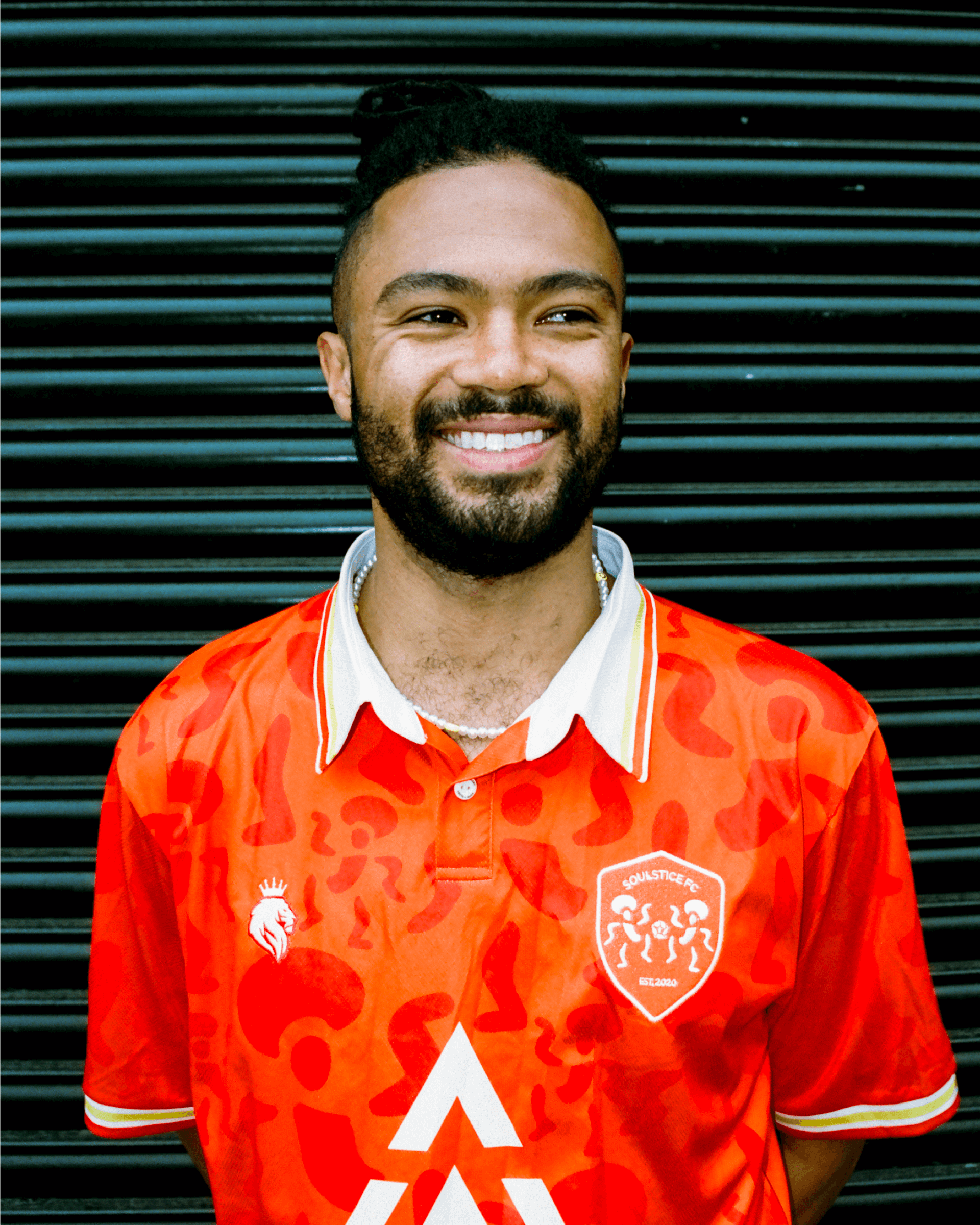
Jamie Oyebode comes from a background in user experience and innovation, with roles at Deloitte Digital and Sky, before going on to lead research at On Road – the agency known for its work with young and underrepresented audiences, including on Nike's Nothing Beats A Londoner campaign and Spotify Wrapped. He recently moved to become research director at Davies+McKerr, noted for its 'planning mindset' approach to insight work for clients such as Pepsi and John Lewis.
What does 'good work' look like to you – and how has that definition changed over time?
What constitutes good work in this field keeps changing. We're more than most at the behest of culture and as that shifts the way you interpret it has to shift, too. But two things jump out. The first is the need to find a compelling emotional story. Whatever the work is, there has to be a narrative that really surfaces the audience and allows you to think about them in new ways – how you access them, how you unlock something you didn't see before. The second part is making sure that story actually connects with the people who need to hear it. You can make something that feels like a great story to us as researchers, but that doesn't always mean it's a great story for the people who need to use it. To do this well you're expected to get into the head of the client and their brand really quickly.
What's changed is that, when I started out, it was more about how well you followed a predefined plan. Agile and iterative ways of working were still embryonic. The value now sits more in the output, even when the process feels messy or uncomfortable. In being confident enough to sit with that ambiguity rather than sticking rigidly to something that was locked in before the project began.
What kind of process brings out your good work?
For me, any process that's inherently collaborative is always going to work better. Anything that allows you to combine different ways of thinking and then get to decision-making as quickly as possible, but always with the best data possible. These collaborative moments, when people come together, are not only where we do the most interesting thinking, but also the part of the process that needs the most focus – saying, 'OK, what do we actually do with this information?' And to my point from before, as an agency that's what we're paid for. We're paid for commercially relevant output.
What's a common tension that gets in the way of good work?
A big one is confusing an interesting data point with an actual insight. You can find a killer quote or a shocking stat, but on its own it isn't that impactful. What matters is turning it into something strategic that creates meaning – asking the 'so what?' behind it.
That's something I work on a lot with less experienced researchers. When they bring me an interesting quote or observation, I always push them to ask why it matters and why a client would care. Those conversations can get a bit tense – not in a bad way, but because you're stretching someone to think beyond the surface. And that's crucial, because the first thing a client will always ask is what they should do with this information.

How do you hold onto depth when everything's speeding up?
It's not just that everything's speeding up. What people are asking for is growing as well. Everything's getting bigger in every sense, apart from the timelines! So holding on to depth comes down to systems thinking – building frameworks and methodologies that help you digest information properly and work out what actually matters.
If I'm running multi-market work, I'll always create reporting frameworks upfront. So when I get to that point of looking at lots of interviews across lots of markets, I know exactly what I'm looking for and I can compare and contrast properly. Those systems aren't fixed – you learn and iterate – but they give you a way to interpret data quickly without losing rigour.
You have to keep modifying how you work and look for ways technology can help. There's a limit to how fast the brain can move. Tools that help you process information – like AI that can transcribe interviews and surface themes – don't replace judgement. They help you move faster while, importantly, still staying close to the work.
What's something particularly analogue or old-school you still swear by in your process?
I still love taking notes in a notebook while I'm doing an interview. There are two reasons for that.
First, it forces my brain to actively pick out what matters in the moment – a phrase, a theme. When I come back to the notebook later, I've already given myself a head start – these are the things I thought were important at the time, in the context of that person and that project.
Second, I'm very anti people sitting there on a laptop during interviews. I really don't like it. Reading questions off a screen and typing notes straight into a computer turns what should be an engaged, human conversation into something impersonal and transactional. That's completely at odds with what this work is meant to be about. The priority should always be the human connection, not the device.
What's something you've changed your mind about in the last couple of years?
The idea that every insight has to hang off a quote. As research evolves as quickly as it is right now, I don't think we should automatically be expected to rely on observations and verbatim quotes as the primary outputs. Increasingly, I'm finding that the insistence on evidencing everything with a quote actually constrains the work. It anchors insight too tightly to the small group of people we happened to speak to, rather than allowing us to interpret what we're hearing in a broader way.
Sometimes the job is to hear what's being said but then to place it within a much bigger set of influences – not just to replay the voices of the eight people in the room.
How are client expectations evolving?
Are they raising the bar or moving the goalposts?
Before, you could tell a strong story about an audience. Now, it's a baseline expectation that you also give guidance on what happens next. You need to explain what your story means in practice and how it should shape decisions. I actually think that puts researchers in a good position, because it pushes us to apply our core skills while developing more strategy-led ones.
Research and strategy are also increasingly blurring. In the past, I've worked with brilliant strategists who aren't strong researchers but are excellent at shaping insight into a client-ready narrative. And I've worked with brilliant researchers who sometimes get too deep in the detail of telling the story. More and more, clients want people who can balance the two.
What do you hope we're all talking more about a year from now?
What's missing from the conversation today?
What's missing is the right conversation about generative AI in research. We talk about it a lot, but mostly from a place of fear.
These tools are arriving whether we like it or not, but we're not embedding them properly into our processes yet. Instead of pretending they'll replace us, we should be clearer about how they can be used – for example, to do upfront thinking – and just as clear about the loss of depth that comes with using them in the wrong way.
What I also notice is that when clients ask where AI fits into the process, almost any answer that sounds vaguely coherent seems to satisfy them. Very few people really understand the value, the risks, or the trade-offs yet. That's a problem and it's one that's going to take time to unpick.
Ultimately, it needs senior business leaders to properly understand these technologies and their applications. Not to chase efficiency at all costs and not to reject them out of fear either. That responsibility sits right at the top.
If you had to delete one overused word from the industry vocabulary forever, what would it be?
The word 'casting', when people use it to describe finding participants. I find it dehumanising. When I hear casting I think of people in LA queuing for hours for a one-minute audition, and it feels extractive in a way that we shouldn't be treating people in research.
I don't mind the word recruitment, but I'll often just say finding people or finding participants, because we're speaking to people and having human conversations. A lot of people are already nervous about taking part in research, and being told they've been cast just adds pressure. I know I wouldn't have liked that when I was 21, say, and being asked to take part.
How do you describe what you do to someone who's miles away from this field?
I try to uncomplicate it as much as I can. I usually say I have conversations with people about what they like and don't like, and then translate that into strategies for brands. That probably undersells what I do, but I've made my peace with that. It is a strange thing to explain, especially when you don't want to be completely defined by your work, but it's still a big part of your identity. So I tend to explain that market research now is really about understanding people at a more human level. I think the work is still quite hidden, but it's coming into the mainstream bit by bit. Research, brand and marketing strategy are increasingly wrapped into one, and I don't think it's unreasonable that we'll eventually start seeing roles like chief research officer sitting on boards.
Which trend do you secretly think is total nonsense, even if everyone's pretending to take it seriously?
It's not very insight industry specific, but Dubai chocolate and the way it's getting talked about everywhere. I just think the whole thing is stupid. There's obviously a more serious trend around green living but trying to fold Dubai chocolate into that conversation feels forced. It's just pistachio. And I really don't like the idea that cultural currency is being driven by recreating a chocolate that already exists and dressing it up as something more meaningful.
What's a recent piece of work – yours or someone else's – that made you feel 'this is what it's all about'?
We were in India helping a client identify product opportunities in cricket – things like performance shoes and clothing. I spent 13 days in Bangalore and Mumbai speaking to young, elite cricketers about the sport. I'm a massive cricket fan, so that alone felt really special. Being able to talk about cricket with people who were incredibly passionate, in a country that's been so central to growing the game, was amazing. But then the project grew. Suddenly the question moved beyond product and became how we crack India, and then how we help this brand take cricket truly global. There was a confidence from the client and from us to go beyond the original brief. That was a moment where I thought this is why I do this for a living.
How has your work changed you?
I've always considered myself empathetic, but my work has made me more so. It's made me think much more about how I meet new people – how to be curious.
Being comfortable outside your comfort zone is a big one, too. And even small things, like asking 'how' rather than 'why'. Asking why can feel confrontational, even if that's not the intention. Whereas asking 'how did that come about?' or 'how do you think about this?' feels more open. It signals curiosity rather than challenge.
So I think it's taught me to let go of a lot of my preconceptions. In a strange way, it's made me realise I shouldn't really be surprised by anything. And even though it can be hard to be optimistic these days, it makes me that, too.
If you could add one question to this interview, what would it be?
I'd ask: what's one thing you do in research that you think everyone else should be doing?
That gets us back to notepads again. Writing things down. Having a notebook there just humanises the whole process. When you're speaking to someone, it feels very different having a small notebook versus a laptop between you. It's obviously inefficient, but never mind. It's totally worth that inefficiency.
