Good Work Matters
Joey Zeelen
Founder at Studio Øutlier
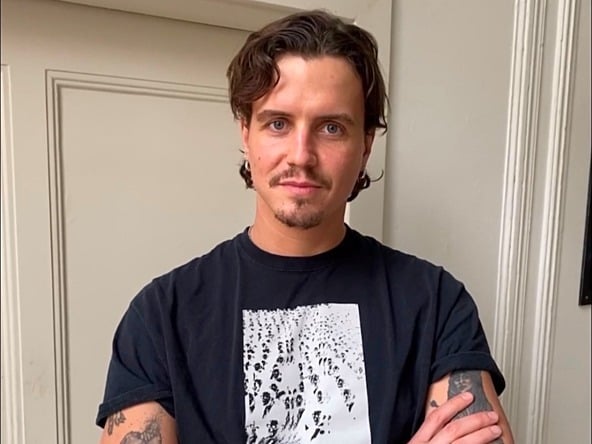
Joey Zeelen notched up a decade at the cultural insights and strategy consultancy Crowd DNA – starting as an intern, concluding as EMEA managing director. He now flies the flag for convention-challenging research at his Amsterdam-headquartered start-up, Studio Øutlier. Not yet a year in, he has an impressive roll-call of clients under his belt and an appetite for busting market research norms. As he puts it: "Our industry needs more outliers – more people that care, people with skin in the game and a belief in human creativity."
What does 'good work' look like to you – and how has that definition changed over time?
Good work's a funny one. In this industry it means so many different things. It can be about winning trust, proving hypotheses, making sure a campaign gets the green light. But for me, there's more to it than that. There's got to be creativity, and it has to have a point of view. Those – along with having real commercial implications – are my benchmarks. Part of that creativity is in how the work looks – and that's not just a vanity thing. It's about how you make it land. Most people in modern businesses are used to things that are well designed, clear, aesthetically good. Or actually, sometimes they're not used to it from research partners – which is the opportunity. If you can bring creativity and visual impact into this space, you stand out. There aren't that many of us doing that. Has my definition changed? Definitely. As you go through your career, the bar keeps moving. At first you look at what your colleagues are doing, then what other research agencies are doing. Now, I take more inspiration from far outside the industry – it could be from dance music subculture, or poster design, or experimental spaces. I'm more interested in what advertising agencies do, or big production houses, or design studios. I want to make work that can sit next to that stuff.
What kind of process brings out your good work?
Every project has a process, but I'm also a bit anti-process. The best work comes from doing – from people who are hands-on, who just want to get shit done. If you get people like that in a room, people who take ownership and move things forward, that's when the best work happens. All the frameworks and check-ins and endless meetings about details – that's the stuff that gets in the way of doing good work. So much comes from working with people you actually want to work with – people with that same energy, that same interest in making good things. And then just cutting out as much process as you can along the way. Have some process, but no more than necessary.
What's a common tension that gets in the way of good work?
A big one is risk aversion. This kind of corporate sameness, you know? People afraid to have a strong point of view, or to bring one into market research. That's a real tension.
It's hard to find people who know how to do the research but aren't shaped by that machine. People who believe in things, who are daring enough to cut corners when it makes sense, who are fine with leaving some things behind for the bigger picture.
And it's both internal and external. In agencies, people can be afraid to push it – to stand in front of a client and really have a strong opinion. And on the client side – especially those in research roles – they often don't want something that completely flips the script. They'd rather see something that moves things on by five percent. It feels safer. So you end up with more time spent on methods and sample sizes, and less on a story that actually shakes things up.

How do you hold onto depth when everything's speeding up?
I don't think depth necessarily comes from having more time on a project. You can still get there fast. Look at strategists in creative agencies – they're expected to move fast and still go deep; they turn around proper thinking in a day. Market research, on the other hand, has this security-blanket thing – 'we need two months, we can't do that in two weeks.' But you can. Run methods in parallel, drop the unnecessary steps. There are too many safety nets that slow everything down and push the real thinking to the very end.
For me, whether you have lots of time or not, you hold on to depth by staying connected to the world. By being culturally curious, by paying attention all the time, not just when a project starts. That's the essence of good cultural work – it's not something you have to summon out of nowhere in a rushed analysis session at the end. It's something you've been building all along.
What's something particularly analogue or old-school you still swear by in your process?
I do pretty much everything on my laptop, to be honest. But I still watch linear TV, if that counts. I try to keep some time for it because that's where normal society actually shows up. New York, London, Amsterdam – that's not normal life for most. So I still go back to my hometown (Venlo in the province of Limburg), talk to people there. I guess that's analogue! It's definitely a more grounded way of staying in touch with how people think.
It's important, because good cultural work means knowing both the edge and the centre – and being able to tell when something really connects beyond your own bubble. Too often you see ideas that feel completely detached from how most people live; it might be our reality, but it's not the reality. The best work understands both worlds and, when it matters, knows where they meet.
What's something you've changed your mind about in the last couple of years?
The obvious answer is AI. At first I was a bit wary – like a lot of people talking about it on LinkedIn in a negative way. But now I think it can be great for the industry. If you've got talent and good ideas, it's a brilliant tool and doesn't have to be seen as replacing human creativity.
I've also changed how I see the industry itself. Big agencies – whether creative agencies or research ones – are under pressure. Clients want things faster. More agile, more strategic, more collaborative. The old structures struggle with that. The power's shifting towards smaller, independent outfits.
What I'm building now feels right for the moment – still premium, but without the overheads. Clients are happy to pay for expertise, not bureaucracy. And the bar's higher now. You can't get away with uninspiring, conservative market research anymore. Creative agencies are building their own research capabilities, bringing different energy in. So research has to step up and meet that same level of craft and ambition.
How are client expectations evolving?
Are they raising the bar or moving the goalposts?
There's the whole 'go faster' thing. People in research treat it like it's the enemy. It's not always. Maybe it's stressful for some, but from a business and creative point of view, fast can be good. You just have to do it the right way.
There are so many ways to move faster without losing depth. We accept routine: get the brief, wait for recruitment, wait for fieldwork, wait for analysis. There's so much dead time. It doesn't have to be like that. You can do things faster and better if you're smart about it.
What do you hope we're all talking more about a year from now?
What's missing from the conversation today?
A more mature conversation about tech, and a more creative one about research. We need to start bringing sophistication to the GenAI debate. It isn't one thing; it's a hundred things. LLMs, video tools, agentic systems – some great, some useless. It's messy, but let's prioritise talking about the quality it can bring and ditch the rest.
Let's remember that you still need taste. You still need to know what good looks like. You already see clients getting work from big agencies that's clearly AI-written and totally flat. There'll be a pushback against that and more value placed on people who can use these tools with craft and judgment.
And yeah, creativity in research. We've got more tools than ever, so let's show some imagination in how we use them. For instance, I often build proposals more like a creative agency would – show clients what something could look like, not just tell them. Editorial examples, film clips, artwork – things that make the idea tangible. Clients don't always have a vivid imagination, so you need to show them the world you're trying to take them into.
If you had to delete one overused word from the industry vocabulary forever, what would it be?
There's a few, but I'll go with 'consumer'. It's such a classic problematic one. It just implies people are sitting there waiting to be fed things. It's not how the world works.
Most of the time, people aren't consuming anything in the simplistic way the term imagines. They're living their lives – not thinking about brands, not thinking about categories or shopping carts. They're people. And that's what we should be talking about. We're trying to understand and motivate people to enter a category, not report on some abstract idea of a consumer who lives inside it.
How do you describe what you do to someone who's miles away from this field?
It depends who I'm talking to. I don't love talking about work with people who have no connection to it – it's just not that interesting for them. If someone's completely outside the industry, I might say marketing or advertising and change the topic. But if they're a bit closer, I'll say market research – but that I do it in a more interesting way. Something that's nearer to cultural strategy – understanding how people live and then turning that into ideas brands can actually use. People always say this is a hidden industry, which has two sides to it. The bad side is that it's very white and middle-class. We have an accessibility and diversity problem and that's partly because it's not in the mainstream eye. The good side, from a business point of view, is it's not as overly saturated as other marketing communication fields. There are the super big agencies and then some mid-sized ones, but in the space I'm in there are only a handful of real competitors. I've still got big enemies to fight against, which is good, but it also feels like I have lots of room to move in.
Which trend do you secretly think is total nonsense, even if everyone's pretending to take it seriously?
The whole wellness thing. I think it's highly overstated, especially when people link it to Gen Z. Take Gen Z and alcohol. Everyone explains it through wellness, but that's not really it. They have less money. Going out is expensive. Covid changed behaviour. They use other stimulants like weed, maybe even class A drugs, more than people think.
Look at alcohol brands. The category's struggling, budgets are tight and everyone's piling into 0.0 launches as if that's the fix. But it's not. The real issue is that the industry feels outdated – it hasn't learnt to talk to Gen Z or fit with their occasions, spending habits and lifestyles. Wellness plays a part, but it's not the story.
There's also too much hyper-focusing on small trends and not enough on the bigger picture – the social, economic and political stuff that actually shapes behaviour. Those slower, structural forces usually matter more than whatever the trend of the year happens to be.
What's a recent piece of work – yours or someone else's – that made you feel 'this is what it's all about'?
We recently worked on a project for a large family entertainment brand. The timing was wild: they'd just gone through a PR storm over a campaign that had completely backfired. Anyone with half a cultural antenna could've seen it would, but it still made it out into the world.
I asked the research manager if they'd tested it and he said they had – a quant test with 200 nationally representative people, and that nobody said they didn't like it. And that's exactly the problem. There's loads of research happening, but hardly anyone's digging deeper.
At the same time, we were running our own study – spending time with families, eating with them, being in the moment with them. Proper contextual stuff. The footage looked great, and the insight was real. When we presented it, the client loved it – they'd never seen anything like it.
It was such a contrast: their cheap, tick-box quant versus this human, in-context work. You could see the penny drop – 'ah, right, there's another way to do this.'
How has your work changed you?
In pretty much every way. Back when we first spoke (I interviewed Joey for his internship at Crowd DNA), I wasn't really interested in much beyond dance music and going out. I hadn't found anything that properly triggered me. Getting into this world changed that. I've become a bit of a workaholic – not out of compulsion, just because I love it. If you'd told 25-year-old me that I'd be talking about work this much, he'd have thought it was pathetic.
It's also about the business side – not just the research. When I started, I loved the craft, the methods. Then I got into how to sell it, build it, scale it. Every stage has had something new that's kept me hooked. And now, a few months into this new thing, there's this feeling of 'I knew I could do it – and now I have.' It feels good.
If you could add one question to this interview, what would it be?
Something around teamwork. Obviously it's so important and I think an agency is about building the right team and mentality. That's probably the hardest thing of all.
But I also believe in proper ownership, making sure everyone knows exactly what they need to do, not just leaving it open for the group to somehow solve. I think that's a big misunderstanding of teamwork – people think it's sitting in a room and chatting for hours. I keep it lean – often just two people on a project, taking full ownership from start to finish.
I think the traditional agency model assumes training happens through the pyramid – institutional knowledge trickling down in some highly structured way. But the best way to learn is just by working with good people and getting involved. We need to keep it simple, not get lost in complex learning systems.