Good Work Matters
Saul Parker
Founder at The Good Side
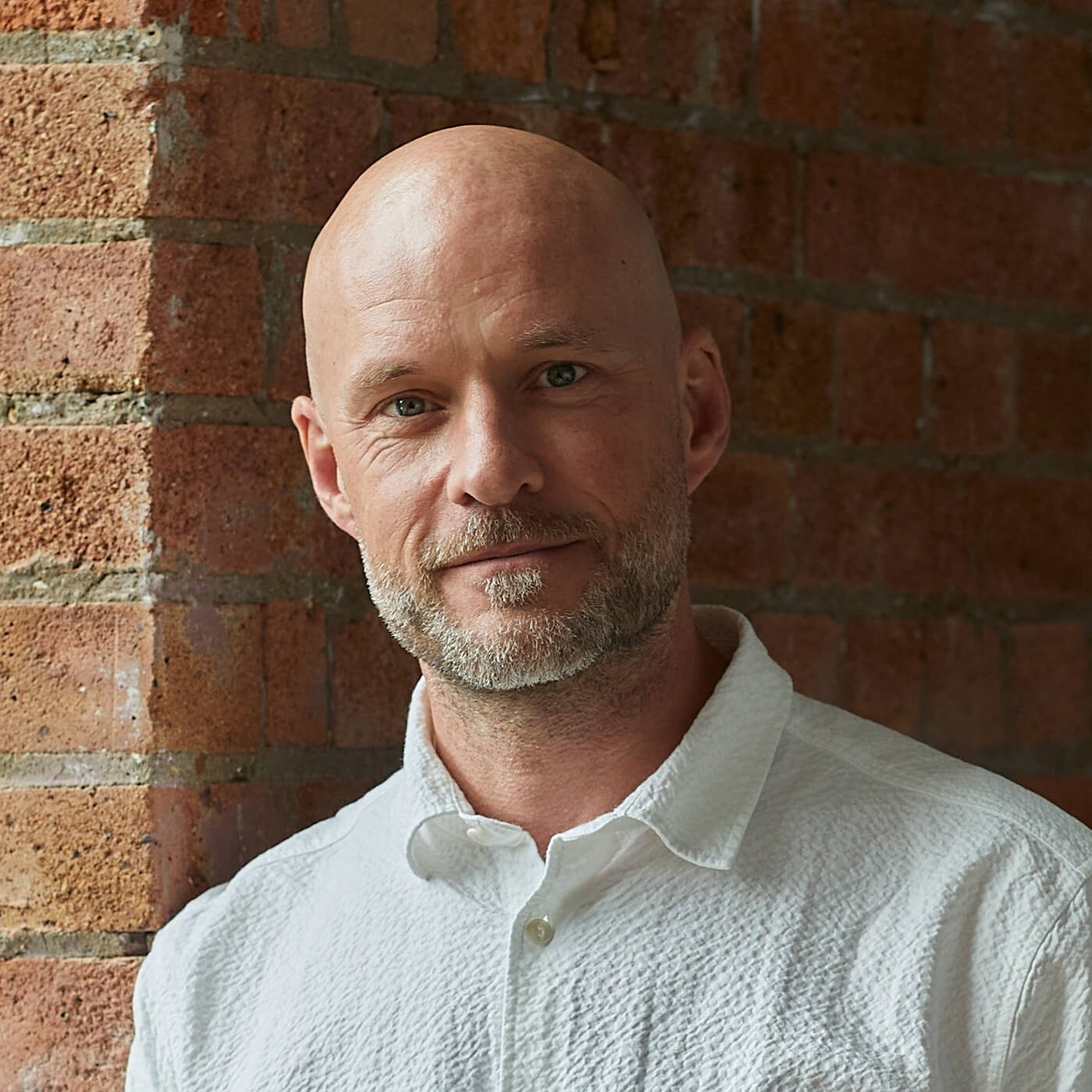
Counting 25 years' experience and a background at storied agencies like M&C Saatchi, Naked Communications and Flamingo – plus a stint leading insight and strategy at Nike Foundation's Girl Effect – Saul Parker launched The Good Side in 2016. Their website explains: 'We blend audience research, brand strategy, and visual storytelling to help brands and charities cut through cultural noise.' In terms of the business ambition, Saul frames it simply: "Not growth for its own sake – but staying sustainable and exciting. Letting growth be the outcome rather than the objective."
What does 'good work' look like to you – and how has that definition changed over time?
Good work comes down to impact. It only matters if it actually changes something for the client – like helping them make better decisions, shifting something internally, or moving a brand or organisation forward. Earlier in my career I probably obsessed more about depth or novelty of insight, the beautifully crafted bit of research. But ultimately insight is only meaningful if it inspires people to act. I guess I've picked this up from my beginnings in strategy, where your job is to create a map and then get people to buy into it. Creative agencies teach you that landing an idea is basically a campaign in itself, and I've carried that mindset into the work we do now. From proposal to debrief, it's about how we land the thinking and get people to commit to it. It's why writers often thrive in this space: they instinctively understand how to persuade, how to get an idea to stick, in a way some pure researchers can find harder.
What kind of process brings out your good work?
It comes down to two moments: how you begin and how you end. At the start, you have to properly embed yourself in the client's world – their business, their tensions, their ambitions. You have to fall in love with their problem. If you don't genuinely care about what they're trying to solve, the whole thing remains too abstract in your mind. The other moment is at the end, where the work eventually lives. It's about how it travels and how it can be embedded. Whatever you produce – a film, a set of workshops, a framework – it needs to be something that can move through the organisation and be used. Everything in between matters, of course, but I've learned that if you get those two moments right – the deep immersion at the beginning and something people can genuinely take forward at the end – that's what makes the whole thing work.
What's a common tension that gets in the way of good work?
Projects get squeezed, briefs arrive late, answers are needed early and the first things to get cut are the bits that actually make the work useful. Stakeholder interviews, in-person workshops, the things at either end of the process that help you understand the problem and help the work travel.
Ego is the other big one. Whether it's mixed-methods teams or agency/client dynamics, you get people defending their bit, wanting to be right, wanting their part to dominate. Everyone wants to have the answer and you get that slightly adversarial dynamic – particularly when a creative agency is involved. There's this expectation that researchers are going to show up, tell them their work is terrible, and make the client hate them.
We spend a lot of time defusing that from the outset and making it clear we're on the same side. It's just a load of brains trying to get somewhere together. Over the last few years I've learned to take myself out of it from an ego perspective. It's not about my idea being the idea. It's about finding the thing that matters.
And then there's the 'boiling the ocean' issue – starting from first principles as if nothing has ever been asked before. Most clients are sitting on a ton of insights and data, even if they don't fully realise it. You can get surprisingly far with a simple rewind: pulling it all together, an AI sift, whatever it takes to understand what we already know before we build. We're swimming in data; the trick is not pretending every project starts from zero.

How do you hold onto depth when everything's speeding up?
This might sound contradictory, but it's important to get to that first pass, an early version of the insight, as quickly as you can, because that's what gives you time to dig deeper into the implications. Time gets lost in all the setup, when the real value is in that deeper thinking later on. The sooner you reach that bit, the better the work tends to be.
I also find it helps to bring in another brain at some stage – someone senior who isn't in the weeds – to push the thinking on and ask the awkward questions. A bit of a hot-box session.
And then there's the writing. When you're short on time, it's so much easier to write a lot than to write tightly. That really clear, pithy writing takes time – editing, sculpting, working it down to the core. Most people don't have space for that, so the work ends up flabby even when the thinking underneath is strong.
What's something particularly analogue or old-school you still swear by in your process?
Plain paper. I do so much of my best thinking on a blank sheet – usually whatever spare printer paper is lying around. There's something freeing about an empty page with no clutter. If I'm a few days into a debrief or a proposal, I'll often start the day by not opening my laptop at all. I'll take a clean sheet somewhere quiet and just ask myself: what's missing? What does the client need that isn't in here? What are my hunches? It's a way of getting a pure read on what's sitting in my head before all the noise creeps in.
And if there's no paper around, it's a quick Apple Note. In fact I run my whole life from Apple Notes. Once the thoughts are down, that's that. I don't want to carry around notebooks full of things I'll never look at again. The paper is just a conduit to get the clean ideas out and then I move on.
What's something you've changed your mind about in the last couple of years?
I've gone on a real journey with AI. I still have moments where I get petulant and want to throw it all away, and then loads of moments where I find it genuinely helpful. I'm still working out how to bring it properly into the practice, but I think one of the biggest challenges is that the industry – mar-tech, res-tech, whatever we're calling it – has done a poor job of selling itself. There's no great cultural story about what this stuff is doing for us.
I see a lot of solutions built to help clients reduce agency outlay rather than solve the real pain points in our jobs. And so many tools try to leap straight to the implications. I don't want them to tell me what it means – I want the raw patterns so I can work that out.
For The Good Side, it's still an experimental space, not really codified. But there are things it's brilliant for – analysing masses of content quickly, clustering transcripts, pulling quotes in seconds instead of a junior spending two days fishing around a spreadsheet. That's actually helpful. So really, I just want the tech to listen more to what researchers need.
How are client expectations evolving?
Are they raising the bar or moving the goalposts? I think clients more than ever want to work with senior partners. They don't want to pay for training junior people on their project. And with the market fragmenting and loads of senior people floating around – all these one-person bands and directors for hire – it's really easy for clients to get someone experienced straight away. So that old pyramid model, with a few seniors at the top and loads of mid- and junior-level people underneath, just isn't really fit for purpose anymore. But I also think calling on the one-person band is pretty challenging, and maybe risky, if you're a big client trying to understand multiple markets in a few weeks. The infrastructure and process just isn't there. So there's a middle ground, which is kind of where we sit: a group of great senior people with solid support. We're more like a column than a pyramid, with senior people properly in the work the whole time.
What do you hope we're all talking more about a year from now?
What's missing from the conversation today?
Celebrating excellence – teams and businesses who are really great at specific things, who have craft and are growing talent. We all say, 'what about the kids?' but no one's really doing anything about it because everyone's in this survival mindset. I'd love in a year's time for us to have course-corrected a bit – to be talking about how we build talent and how we recognise people and businesses for doing things really well.
The other thing is I'd love these conversations about AI to feel less novel, and just a part of the different ways you can build a mixed-methods practice. It reminds me of that moment when online communities and social media analysis blew up and everyone thought it was going to change everything. I hope we get to a place where this just becomes part of the practice rather than the whole conversation.
If you had to delete one overused word from the industry vocabulary forever, what would it be?
'Respondent'. I get angry every time I hear it. It's such a gross way of talking about a person – like they're lab rats twitching to stimulus. If you start a process thinking of the people you're working with as respondents rather than humans who come with stories and emotions, how are you ever going to get anywhere deep?
How do you describe what you do to someone who's miles away from this field?
It's a hard one. I sometimes wish I had one of those one-word jobs everyone understands – 'I'm a lawyer,' 'I'm a baker' – and you can just move on. But what I usually say is that we work with organisations to understand audiences and what's going on in society and culture, so they can make better decisions as a business. I never say market research. I never have. It makes me think of the 1980s or whenever and the industry is completely different now.
Which trend do you secretly think is total nonsense, even if everyone's pretending to take it seriously?
I hate trends fullstop! Specifically the predicting of them. I've worked in that world, so I know what it is from the inside. No one knows what's going to happen in five years' time – it's speculation with no consequences. It's not pointy insight; it's frivolous prediction dressed up as certainty. And half the time it only becomes 'true' because powerful people act on it, not because it was right. I saw a trends folder the other day – 150 reports predicting 2026 – and I chucked them all into Google Notebook. The themes were basically identical to the things we'd seen the previous year. That's the joke: next year's trends are just last year's patterns repeated.
What's a recent piece of work – yours or someone else's – that made you feel 'this is what it's all about'?
I think it's the manosphere work we've been doing. It's this really in-depth piece on an issue that's so alive in culture, but that also involved proper deep audience understanding and lots of interesting methodologies. And the client (men's health charity Movember) has been amazing – really generous about letting us experiment and also wanting the work to be shared widely, which is so gratifying. We finished the report, had the launch lined up, and then Adolescence came out. Suddenly everyone was talking about boys, and our work was sitting right in the middle of that moment. We'd been invited to a preview, so we knew it was going to land in a big way. It was thrilling timing. We're still presenting it, we won an award for it the other day, and it's one of those moments where lots of things line up: the work is good, the issue matters and people are actually listening.
How has your work changed you?
I think the biggest way it's changed me is through running The Good Side, rather than the work itself. I wasn't really prepared for how different it is to learn to be a leader rather than a practitioner – trying to grow people, nurture talent, build a culture. It's such a different thing to being an analyst or a strategist, and it's hard. It's definitely aged me! You never leave it behind; it's there every minute of the day and night. Everyone said it would be like that, and they were right.
And because I run it with my husband – he's a documentary filmmaker – it bleeds into everything. One of the hardest parts is when you don't want to talk about it but it's all you can think about. You're sitting there on a Friday night thinking, 'I really don't want to say this to you, but it's in my head.' It's amazing and challenging all at once. I wouldn't change it for anything.
If you could add one question to this interview, what would it be?
Something about hindsight – what do you regret not doing or would you have done differently? And for me, the honest answer is I wish I'd started this business sooner. People kept telling me to start an agency and it felt terrifying, for good reasons, but looking back I probably should've just got on with it.
