Good Work Matters
Steven Lacey
Founder at The Outsiders
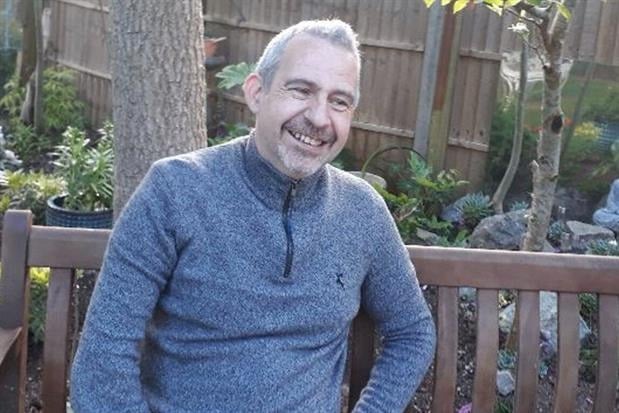
"When trends organisations followed Hoxton, we followed Feltham," says Steven Lacey of his agency, The Outsiders. His work spans campaign development to social policy, exploring the margins and listening to voices often overlooked – from the working classes to the neurodivergent and disabled. Across 25 years in planning and insight roles in both boutique and global agencies, he's consistently challenged industry norms. Recent work includes investigating the rise of right-wing populism and how more effective counter-narratives can be built.
What does 'good work' look like to you – and how has that definition changed over time?
Good work hasnʼt really changed – itʼs still about good insight. Obviously the term 'insightʼ gets misused a lot, but for me itʼs about coming back with something genuinely new or compelling, or reframing something for people. No need to overcomplicate it – thatʼs still the job. What has changed is everything around it. The time pressures have really accelerated – everyone wants things faster – and that pulls you away from where you can add the most value, which is the more strategic work, and pushes you into implementation. Also, you get two types of clients, right? The ones who want to be famous and the ones who want to be accountable. And we're in this real age of accountability now, where people are scared to take risks because of the economy. All of that means the work can drift towards being more bland, a bit more familiar than it used to be. Agencies often want to do the big conceptual thinking, but some clients find that genuinely frightening. And quite a few are blind to things outside of their category, so they don't really think outside their own world. You get this pull towards the familiar, towards confirming what they already believe.
What kind of process brings out your good work?
My process is grounded in the things it's always been grounded in. It's a lot of semi-ethnographic interviews – no one really does full ethnography anymore – and a lot of expert interviews, which really helps elevate the thinking. A big part of it is also experience: knowing what's genuinely new and what isn't. I'll usually start by going through a company's reports and secondary data, so you're not just coming back and repeating what people already know. In terms of how I get to insight, I've got strong experience in things like working class audiences, mass mainstream culture and harder-to-reach people. And I write a lot of my own think pieces, which helps me helicopter out and spot patterns. I can do a lot on my own but it's often better with a team around you. The key thing with teams is having people with genuinely different skill sets and perspectives around the table. That's when things really sharpen.
What's a common tension that gets in the way of good work?
Clients – ha ha! Or more specifically, nervous clients. Process-driven thinking. 'This is how we've always done it' – that kind of fear. And I think AI is starting to amplify that. I talk a lot about what I call fishbowl research or fishbowl marketing. You saw it with Google search: everyone looks at the same data, uses the same tools and ends up with what I call the same 'Google strategist' charts. Now we're heading into the same place with AI. Everyone will be pulling from the same pool and the work risks becoming very bland.
AI can be useful – I've only really started using it recently, mostly at the beginning or end of reports – but it doesn't give you that bit of magic. It won't tell you the unexpected thing. And that's what we risk losing: the magic that comes from original thinking, not just synthesising what's already there.
How do I counter all of this? It's about building trust and showing your capability – showing what you can actually do. Clients, especially insight managers, are often really nervous at the start of a project. But once they see you in action, once they see you moderate, that anxiety drops and they get that you're good. That makes a huge difference.
I also tend to work directly with marketing directors, because they want the big picture. They're not obsessed with process or finding some needle in a haystack. They don't want to pore over recruitment criteria and tick boxes about whether someone drinks four times a week or watches Netflix on a Thursday. What they really care about are the big themes that actually move the strategy.

What's something particularly analogue or old-school you still swear by in your process?
Can we include analysis sessions, proper ones, in this? They shouldn't really be thought of as old school, but it sometimes feels as if they now are. For me, it's essential that there's no corner cutting here – it's literally where the craft of the work is found, the way to get to something different.
People have different ways of running these sessions and that's fine, but if you're not giving this part of work the significance it deserves, in my view you're not really doing the work.
What's something you've changed your mind about in the last couple of years?
Specialism, being a specialist. I've decided it's really important. And it's not just a feeling – as soon as I became more specialist, my income stream increased. There are a lot of generalists out there. Too many! Having more specific expertise is what people want and will pay for. I think they'll pay for that beyond what AI can do.
When people set up their own businesses in this field, I think they often struggle to work out what to specialise in, but mine were quite a natural fit. I launched my company talking about Brexit, so it took me into the mass mainstream in that way. And then obviously being disabled as well took me into another space. In a way, they're all growth spaces at the current time.
How are client expectations evolving?
Are they raising the bar or moving the goalposts?
It feels like the level of risk aversion is particularly high at the moment. There's a lot more fear around getting things wrong, meaning you have to work extra hard to get clients to come on board with more challenging ideas and outcomes of the research.
Alongside this, everyone is tending to jump on the same bandwagons. You've seen it in advertising: everyone did purpose ads, whether there was really a purpose there or not. And now it's entertainment – everyone is talking about how brands need to be entertaining. The themes shift, but the herd behaviour stays the same.
So what's interesting is that, as an industry, we like to think of ourselves as leaders, but we're often being led. We're more sheep than we care to admit.
What do you hope we're all talking more about a year from now?
What's missing from the conversation today?
I think what's missing is a conversation about conversation itself. You hear this from planners all the time: they want more dialogue, more human exchange.
I've even heard of a large multinational that went all-in on AI for a couple of years and then pulled back because the insights just weren't strong enough. At the moment, everyone's riding that AI curve in market research. But give it a while and I think there'll be a desire to return to something else.
Once agencies and clients start seeing the same insights being produced again and again, and it's obvious where they're coming from, that's when the shift will happen. Unless, of course, you're using genuinely different models. I use one trained on marketing and behavioural science texts, which produces a different kind of output. But that distinction will matter more and more.
If you had to delete one overused word from the industry vocabulary forever, what would it be?
Definitely the word 'culture'. I don't think most people really understand what culture is or how it moves. Culture is slow. It builds over time and doesn't suddenly appear on the high street.
What we end up chasing instead are fast, surface-level fads. The metaverse is a good example – five or six years ago everyone was talking about it, but no one really adopted it. It was talked into existence. Culture doesn't behave like that; it takes time to land if it's real.
The push for speed makes us want simple answers to complicated questions. We flatten audiences and treat people as homogenous. Identity matters – I'm disabled, it's part of who I am – but it's only part of it. Even disability gets turned into a single category, and that's not how people actually live.
The same thinking shows up in how we talk about young people. We projected the future through a small, activist-led group and assumed it represented everyone. But an 18-year-old in Feltham has more in common with an 80-year-old locally than with an 18-year-old in Shoreditch. Most people aren't protesting or theorising – they're just getting on with their lives.
How do you describe what you do to someone who's miles away from this field?
It's a really interesting question. I guess it depends how deep you want to go. Sometimes I'll just say I work with ad agencies. But usually I say it's about understanding what people think about a range of different subjects. I don't often mention market research. People hear that and think of clipboards and surveys. After all these years, it's still such a loaded job title.
Which trend do you secretly think is total nonsense, even if everyone's pretending to take it seriously?
I try to ignore the things which are only really little fads. I try not to let them even register in my mind. I think more of a problem is that people are slow to the things that really matter, compared to the things which don't really matter. I was talking about how young people were moving back to more traditionalist thinking almost a decade ago and people thought I was mad. We have all of the flag stuff now but I was talking about Tommy Robinson in 2017. I predicted Farage would do well a very long time ago, and people were lambasting me for this.
What's a recent piece of work – yours or someone else's – that made you feel 'this is what it's all about'?
The self-funded work I do. The far-right work has been a big one recently. I've also done some self-funded work on Russia and Ukraine, looking at the war and Russian propaganda narratives – working with conspiracy theorists, Tommy Robinson supporters, Russian propaganda followers, as well as people aligned with mainstream parties. That felt important. There's also work I'm really proud of around mental health for young Black men in the US. That was one where I felt it could truly make people stop and think.
How has your work changed you?
I think it's made me very open-minded. I think it's made me more curious. I'm drawn to causes and that's shaped the work I do. I like this opportunity to be the voice of the consumer, or the people, and to amplify that voice outwards. I think that's an important craft which sometimes gets forgotten.
If you could add one question to this interview, what would it be?
I would ask: what is the one fundamental change that we're going to see in society and what will that mean for research work? My answer would be that we've spent years worshipping self-actualisation, but Maslow was pretty clear: only a tiny percentage ever get there. Most people are focused on belonging, security and getting by, and our work shouldn't overlook this.
For research, that means we need to pay much more attention to people turning inwards, especially in the mainstream. There's a stronger sense of inward collectivism – it's about me and my family, and about managing a lack of agency and control. That's where belonging shows up now, at a much smaller scale. The small world becomes the big world.
